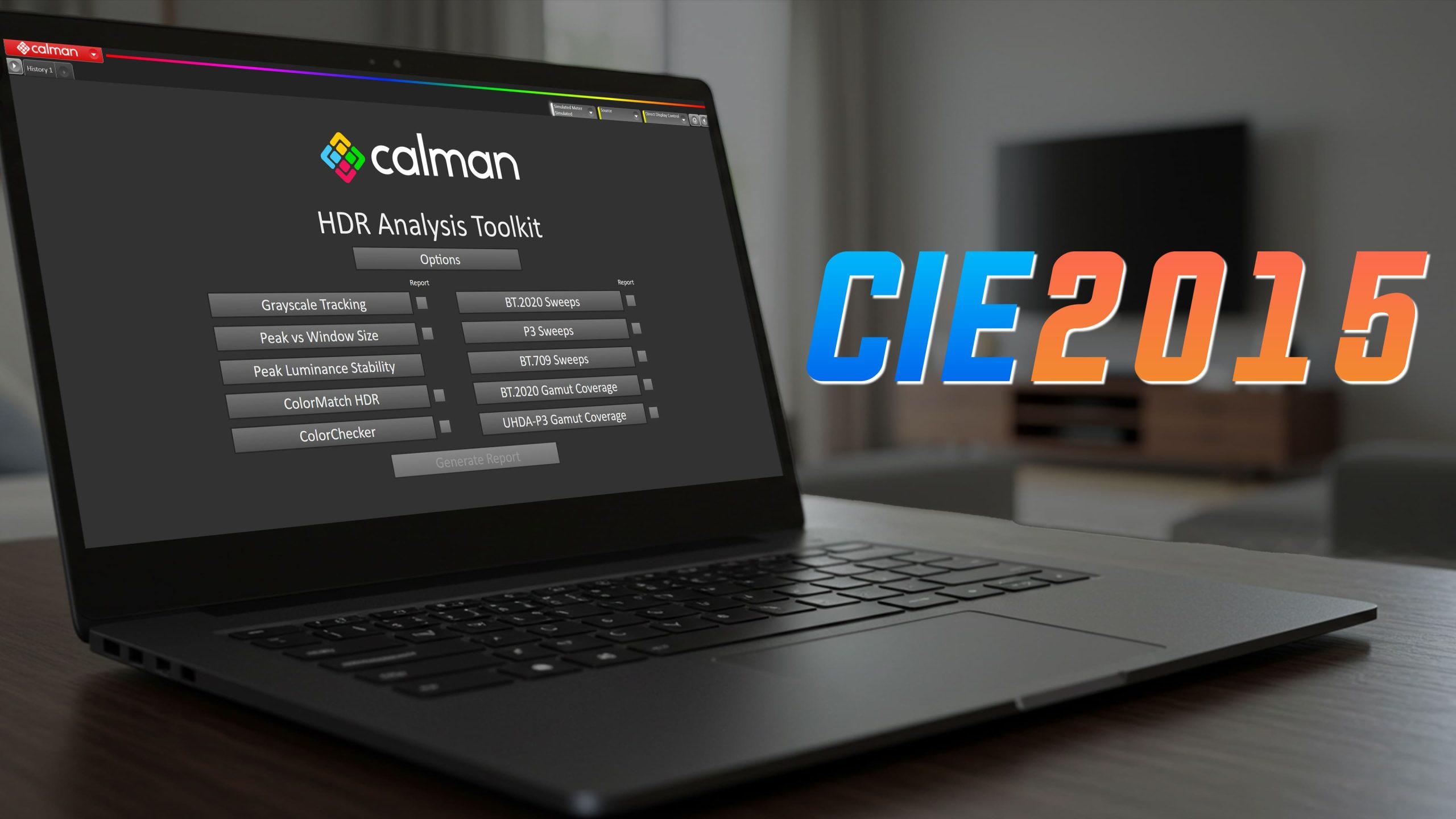
Portrait Displays Adds CIE 2015 Color Matching Functions to Calman®
New 2° and 10° observers bring modern CIE color science to everyday display calibration.
Pleasanton, CA, USA – December 3rd, 2025 – Portrait Displays, a global leader in color calibration solutions, announces that Calman® now includes support for the CIE 2015 2‑degree and 10‑degree color matching functions (CMFs).
The new observers sit alongside Calman’s existing options— CIE 1931 2°, CIE 1964 10°, Judd–Vos, CIE 2006 (CIE 170‑1) 2°, and Csuti–Schanda modified CMFs— giving color professionals direct access to the most recent CIE cone‑fundamental‑based observer model.
“As display technologies evolve, our customers need tools that reflect the current state of color science, not just the science of a century ago,” said Eric Brumm, CEO, Portrait Displays. “By integrating the CIE 2015 observers into Calman, we are helping calibrators tackle metameric mismatch with methods that are backed by CIE research.”
Why CIE 2015 Support Matters
The CIE 1931 2° Standard Observer remains the formal basis of most video and cinema standards, but it was derived from a smaller sample size not representative of the human population, using broad‑spectrum primaries and small fields of view. Today’s displays— OLED, QD‑OLED, QLED, miniLED LCD, and laser‑based projectors often use narrow‑band primaries and wide color gamuts where 1931‑based predictions can diverge from what viewers actually see.
In practice, that means two displays can be perfectly matched in CIE 1931 xyY and still look noticeably different side‑by‑side because their spectral power distributions are not the same, a phenomenon known as metameric failure. This effect has been documented in the literature for cross‑technology comparisons such as LCD vs. OLED and lamp vs. LED lighting.
The CIE 2015 CMFs, defined in CIE 170‑2:2015 and derived from the CIE 2006 cone fundamentals, were developed to more closely reflect the spectral sensitivities of the human L, M, and S cones and to account for field size and age‑related changes in the eye.
Adding these observers to Calman makes that newer CIE framework directly usable in daily calibration work such as perceptual matching across display technologies, evaluating color accuracy where narrow-band primaries and highly saturated colors stress the assumptions of older CMFs. It is especially useful in purchasing decisions where metamerism analysis may identify displays that may have more or less failure dramatically reducing costly mistakes when acquiring displays.
Instrument and Standards Considerations
Because CMFs are wavelength‑dependent, the benefits of switching observer models are realized only when spectral data are available.
In Calman, CIE 2015 observers are therefore intended for workflows that use spectroradiometers, which measure the full spectral power distribution and allow Calman to analyze that spectrum against different CMFs (1931, 1964, 2006, 2015, etc.).
CIE 2015 support is available in Calman Version 5.16.6.9 and on.
About Portrait Displays
Portrait Displays is a leading provider of color display solutions that seamlessly blend the latest advancements in color science with cutting-edge display control technology. With an unwavering commitment to preserving color integrity, Portrait Displays ensures that every screen, regardless of its size, delivers captivating and accurate colors. From the initial creation of the first frame to its final appearance on any device, Portrait Displays remains dedicated to upholding the highest standards of color quality throughout the entire visual experience.
Renowned for its industry-leading Calman® color calibration software, Portrait Displays has gained widespread recognition and is the preferred choice of the most esteemed color professionals in Hollywood. Calman’s robust calibration solutions meet the stringent requirements necessary to deliver an unparalleled viewing experience that is perfectly calibrated.
With decades of expertise in color science and display technology, Portrait Displays is at the forefront of revolutionizing the digital landscape by introducing a more vibrant and immersive future.
For more information, please visit the Portrait Displays website: https://www.portrait.com/