The AOC Monitor Calibration Workflow in Calman guides you through calibrating compatible AOC Calman Ready monitors. It walks you through connecting to the display, selecting your targets, running measurements, and uploading calibration data to ensure accurate and consistent image performance.


Calman Required Version
- Calman Studio or Ultimate v5.16.7 or higher
Hardware Requirements
- Calman Compatible Meter
- Calman Compatible Pattern Generator
- An external HDR-capable generator is required for HDR calibration
- Calman Compatible AOC Monitor:
- AOC Q27U3CV
- AOC U27U3CV
- AOC U32U3 / U32U3CV / U32U3D / K27U3D
Step 1
- From the Calman Menu in the top-left, choose Open Workflow Template -> Calman Ready and then AOC Monitor.
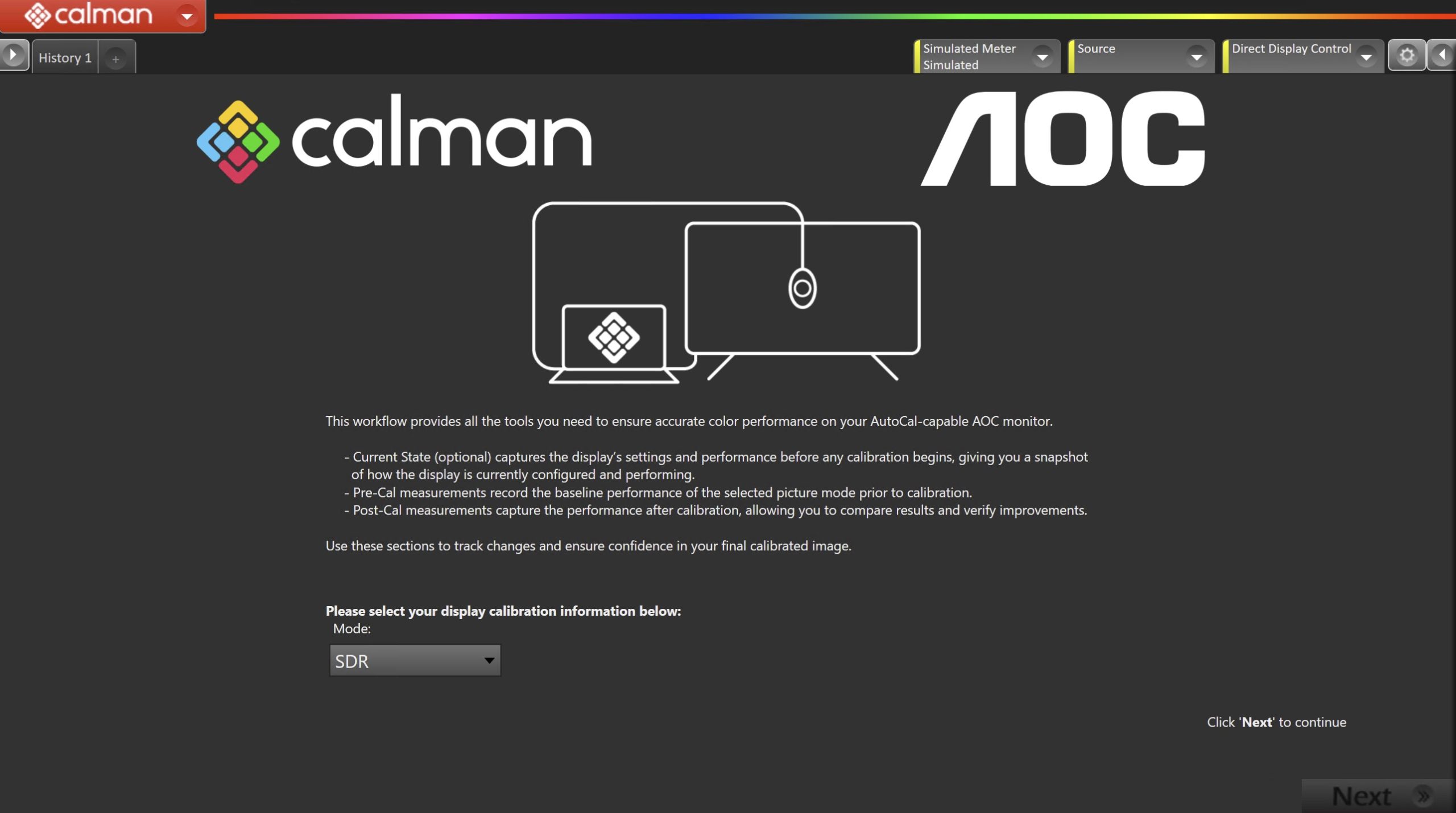
- On the introduction screen, select your calibration mode (SDR/HDR) from the dropdown and click Next to proceed to Hardware Setup
Step 2

- Plug your meter into a USB port on the computer and press the Find Meter button on the left.
- When your meter is connected, select your display type from the dropdown
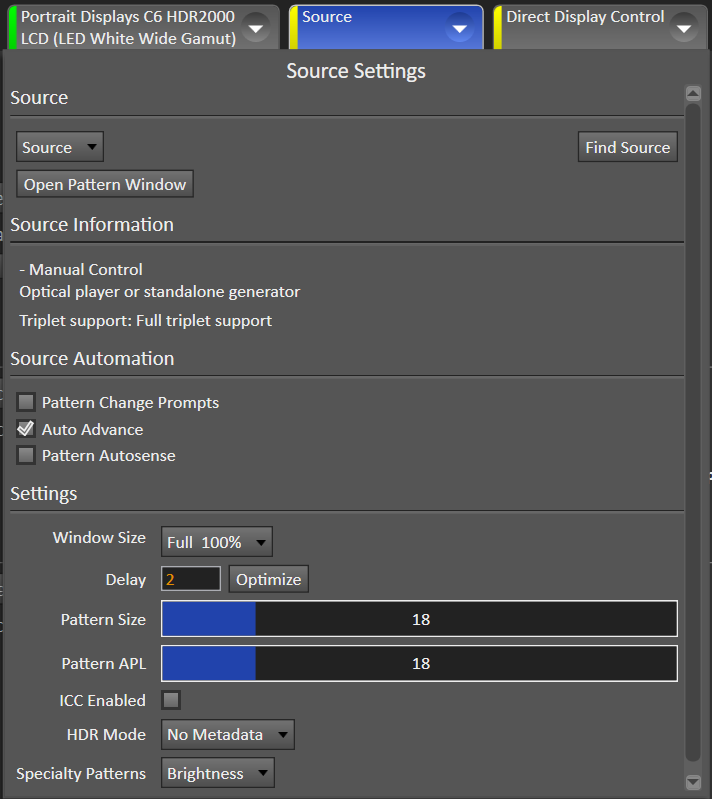
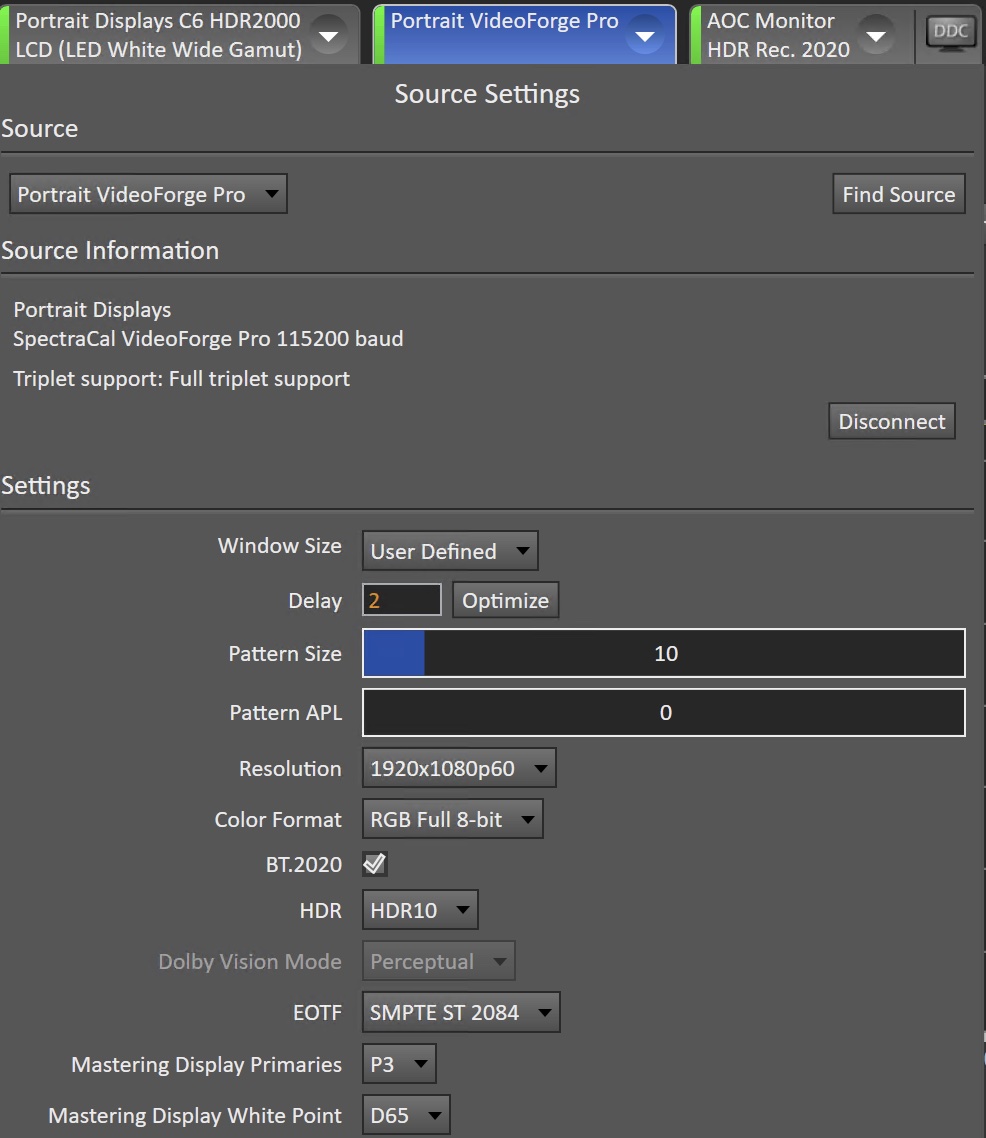
- Connect a Pattern Source to your computer.
- Click the Find Source button, then select your source
- Select the pattern window size and delay
- SDR: Full-Screen with 2-second delay
- HDR: Window 10% with 2-second delay
- Ensure your source is set to match your video range, and SDR or HDR corresponding to your choice in Step 1
- Click Next to proceed
|
Notes:
|
- Connect your AOC Monitor
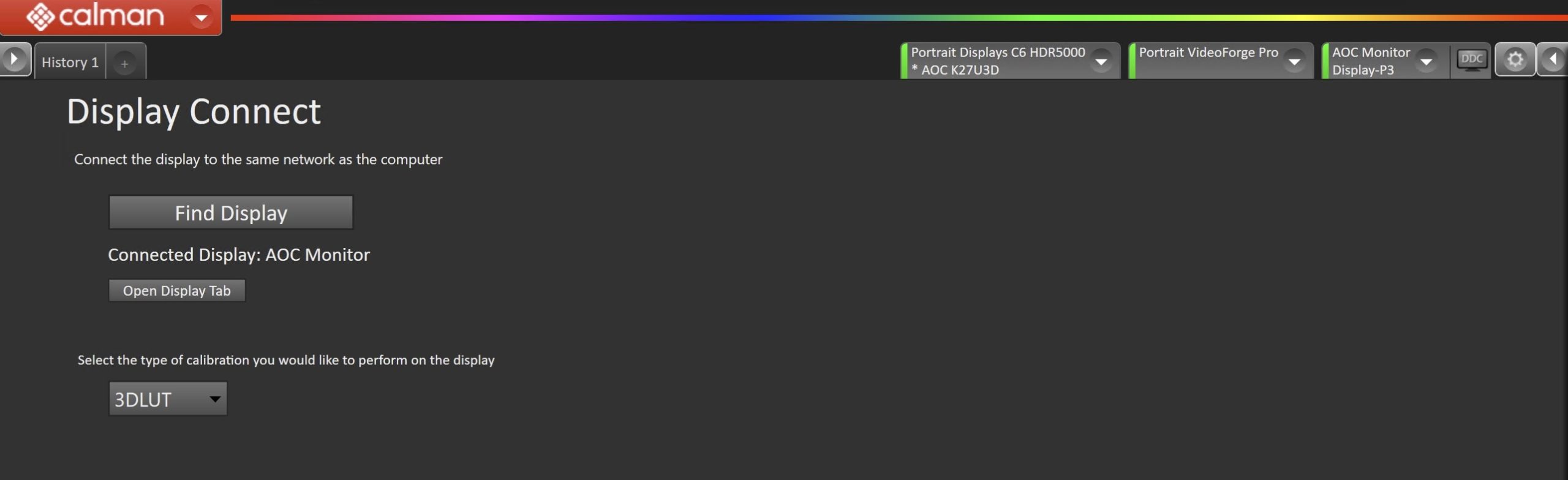
- Connect the monitor to the computer using a USB-C cable for communication.
- Click Find Display
- On the Find Display dialog, select Manufacturer AOC Monitor and your model being calibrated, and click Connect to continue
- Select Calibration Type (SDR Only)
- Confirm Select calibration type: Matrix or 3D LUT
- Note: HDR calibrations must be performed using a 3D LUT
- Confirm Select calibration type: Matrix or 3D LUT
|
Note:
|
Step 3
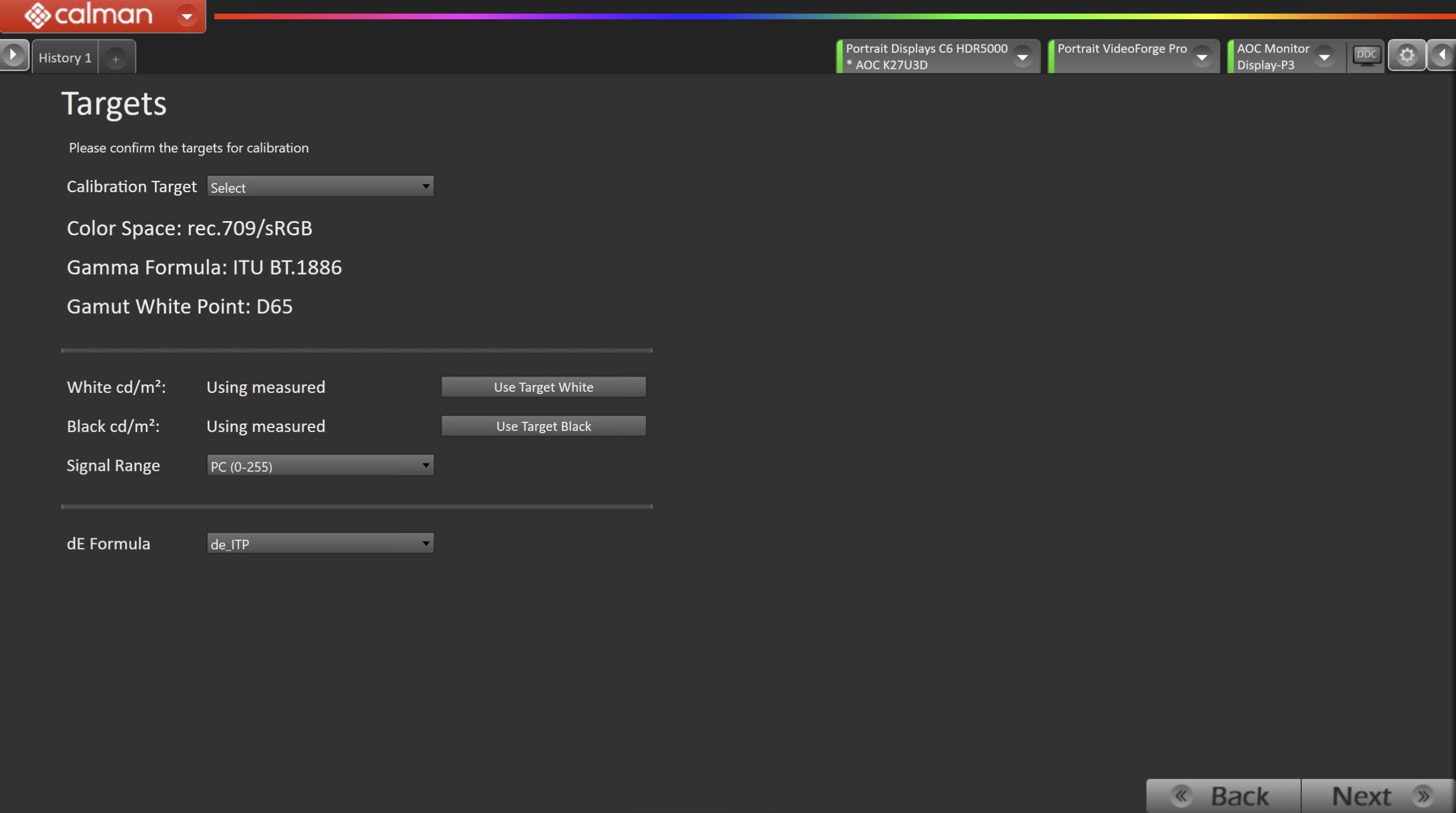
- Select the calibration target.
- Confirm/configure your calibration targets. These will be automatically set to common defaults for the selected target.
- Available Targets:
- Display-P3
- DCI-P3
- DCI-P3 (D50)
- sRGB
- Adobe RGB
- Adobe RGB (D50)
- Rec. 2020
- Rec. 709
- Custom
- Available Targets:
Step 4
- This workflow page is intended to document the target picture mode prior to calibration.
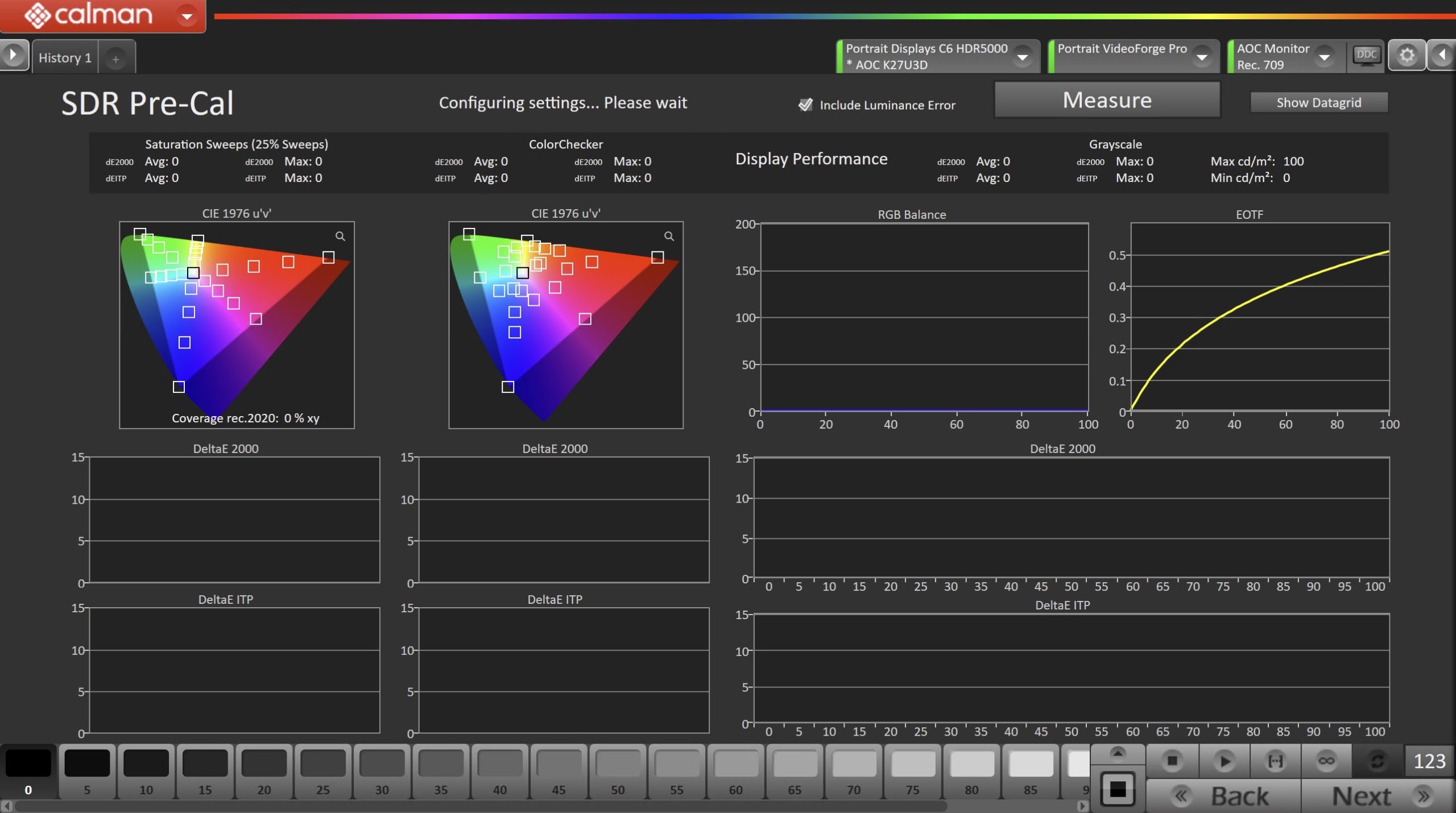
- To take Pre-Calibration Measurements, click the Measure button to measure the display’s rayscale and color response.
- This will provide a point of reference to compare the calibration results
- Click Next to proceed
Step 5
- Here, confirm the selected mode matches your calibration target, and then the display will be reset to prepare for calibration.

- Confirm the display mode you wish to calibrate, and click Reset to prepare the display for calibration
- Note: Each mode can only be calibrated for either SDR or HDR. Use different modes for each to prevent calibration loss
SDR Only – Measure and set Luminance
- Here, you can adjust the monitor’s overall luminance setting to one that meets or exceeds your target luminance.
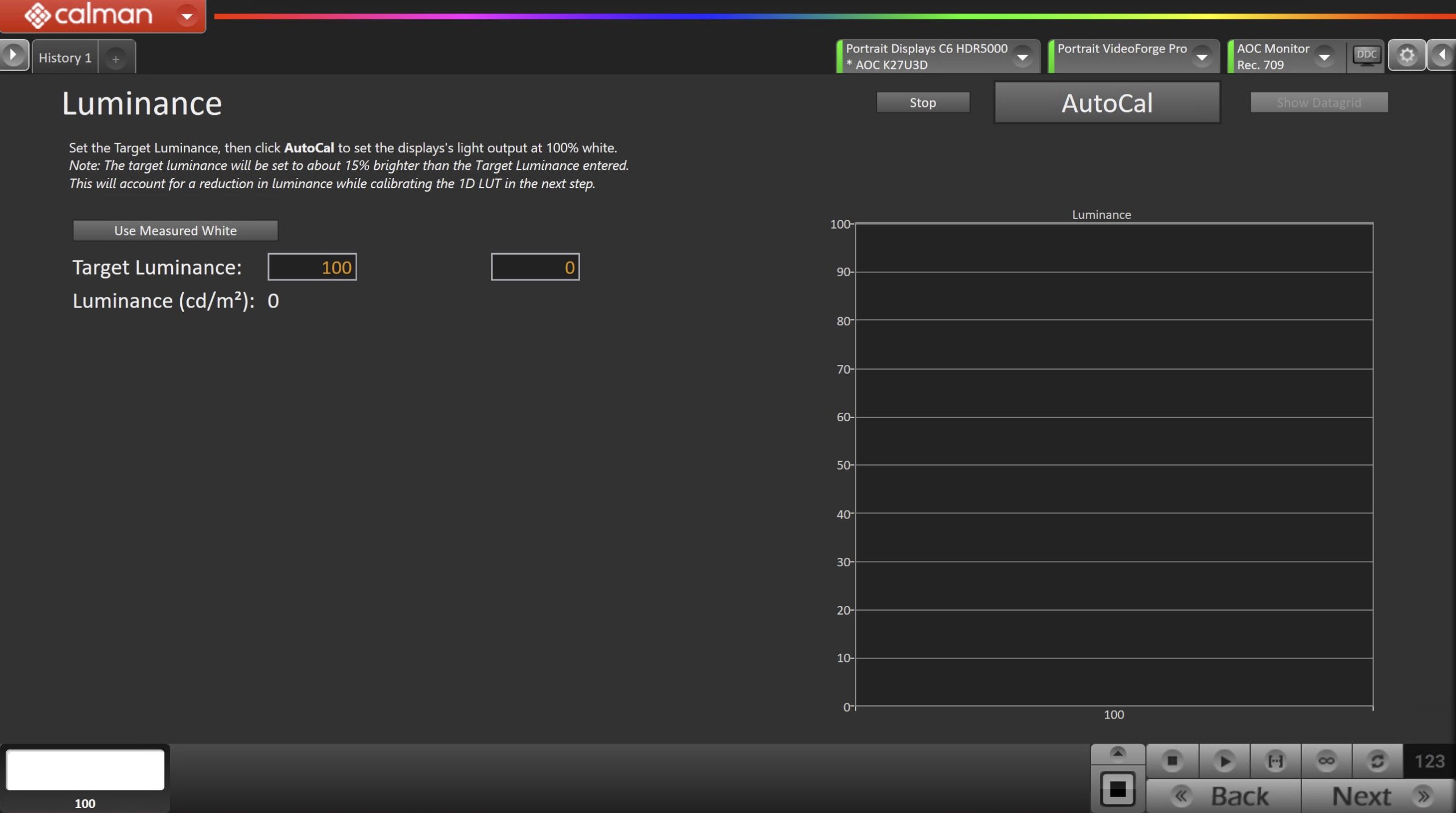
- Set the Target Luminance, then click AutoCal to set the displays’s light output at 100% white.
- Note: The target luminance will be set to about 15% brighter than the Target Luminance entered.
- This will account for a reduction in luminance while calibrating the 1D LUT in the next step.
- Click Next to proceed
Step 6
- Here, Calman will adjust the Multipoint Greyscale of the display using a 1D LUT.
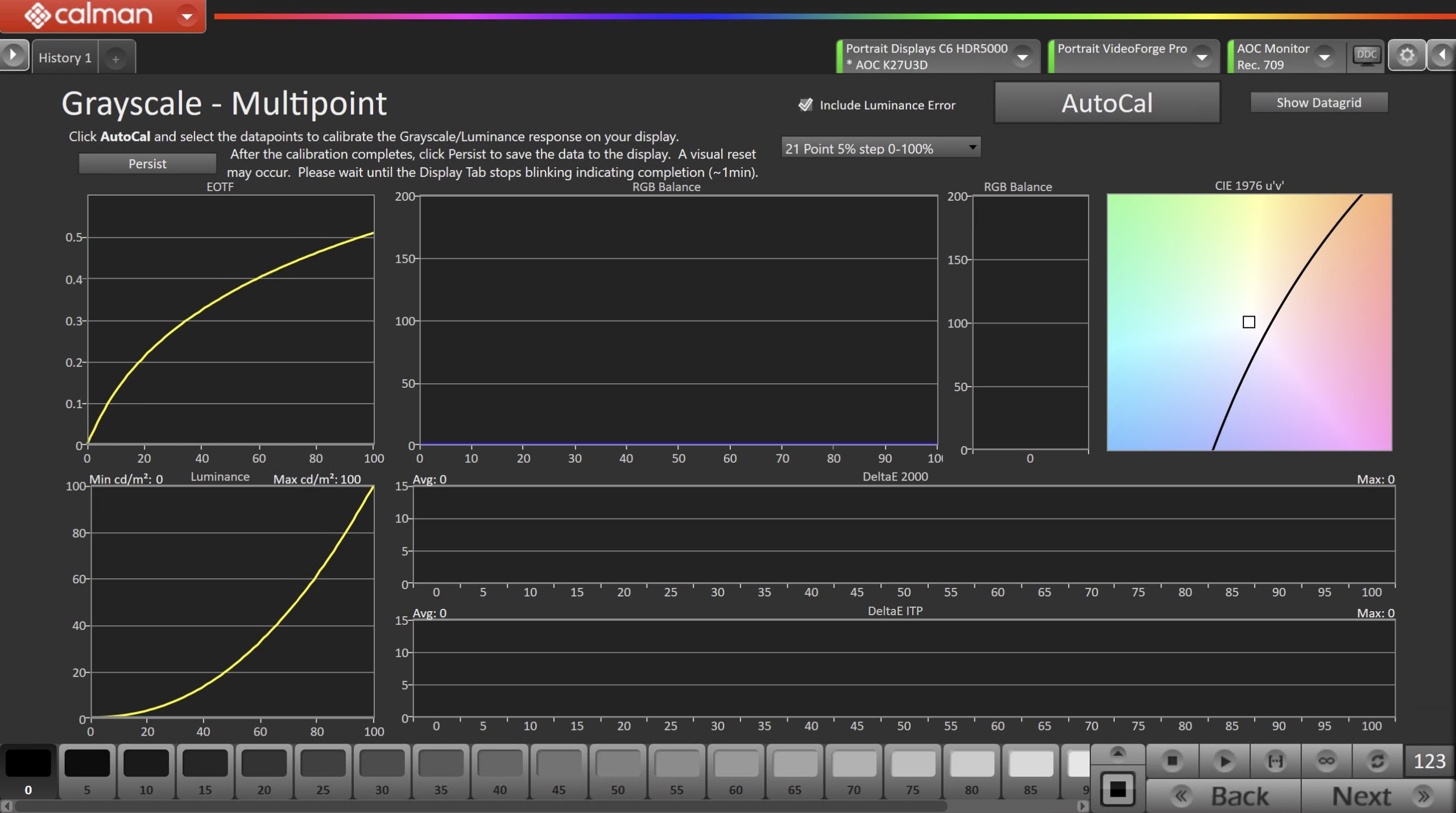
- Click the AutoCal button and select the number of data points in the AutoCal Dialog to auto-calibrate the Grayscale/Luminance response on the display.
- Click OK to begin greyscale AutoCal.
- For 3D LUT Calibrations:
- When AutoCal is complete, click the Persist button.
- This step sends the calibration 1D LUT to the display. A visual reset may occur. Please wait until the Display Tab stops blinking, indicating completion.
- Click the Next button to proceed.
- When AutoCal is complete, click the Persist button.
- For Matrix Calibrations:
- When AutoCal is complete, click the Next button to proceed.
- The 1D LUT will be sent in the next step when doing Matrix Calibration
- When AutoCal is complete, click the Next button to proceed.
Step 7
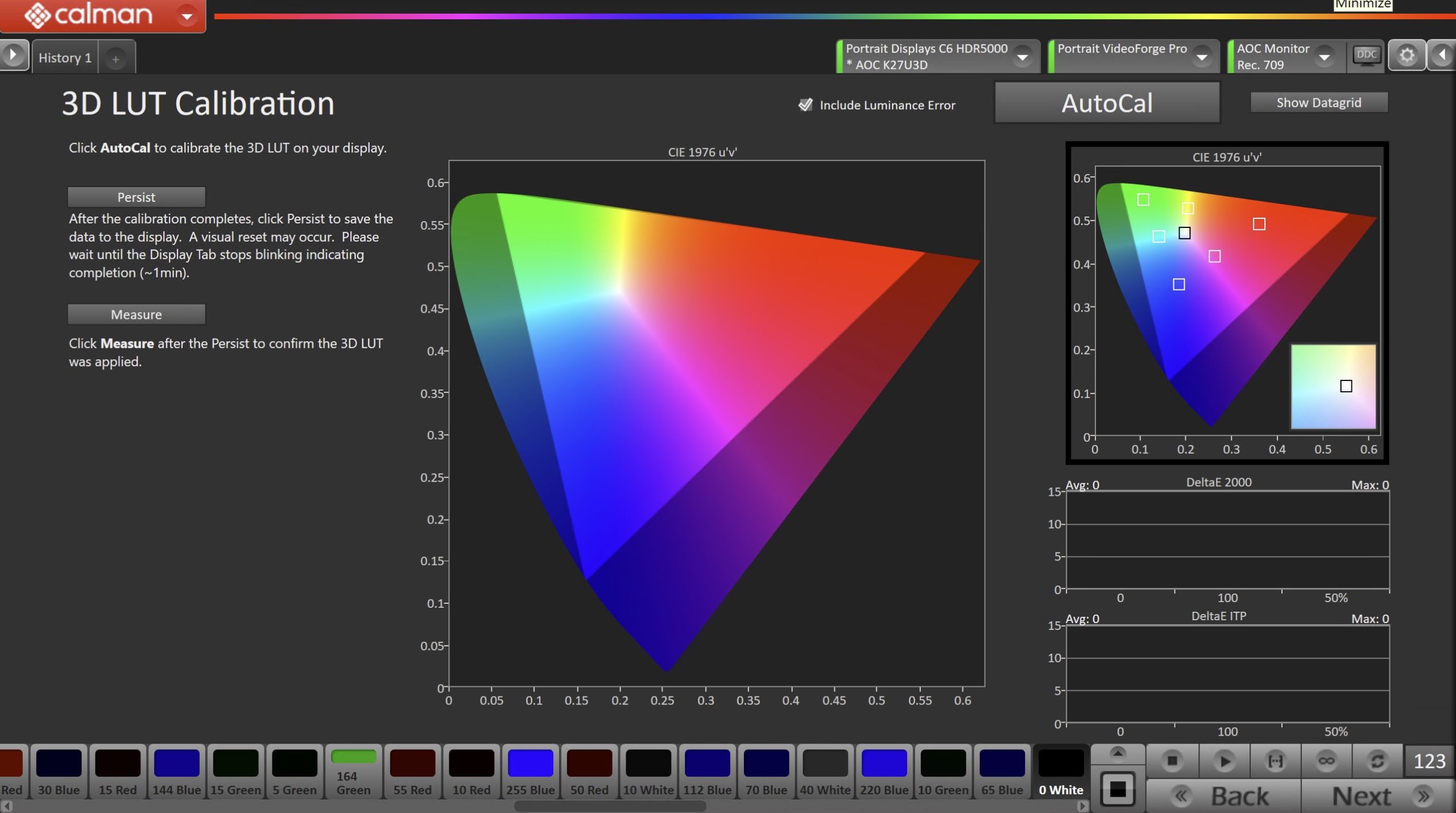
- On this page, Calman will calibrate the color gamut using a 3D LUT or Matrix, depending on the mode chosen in step 1
| 3D LUT | Matrix |
 |
 |
|
|
|
Notes:
|
HDR Only – HDR Transform
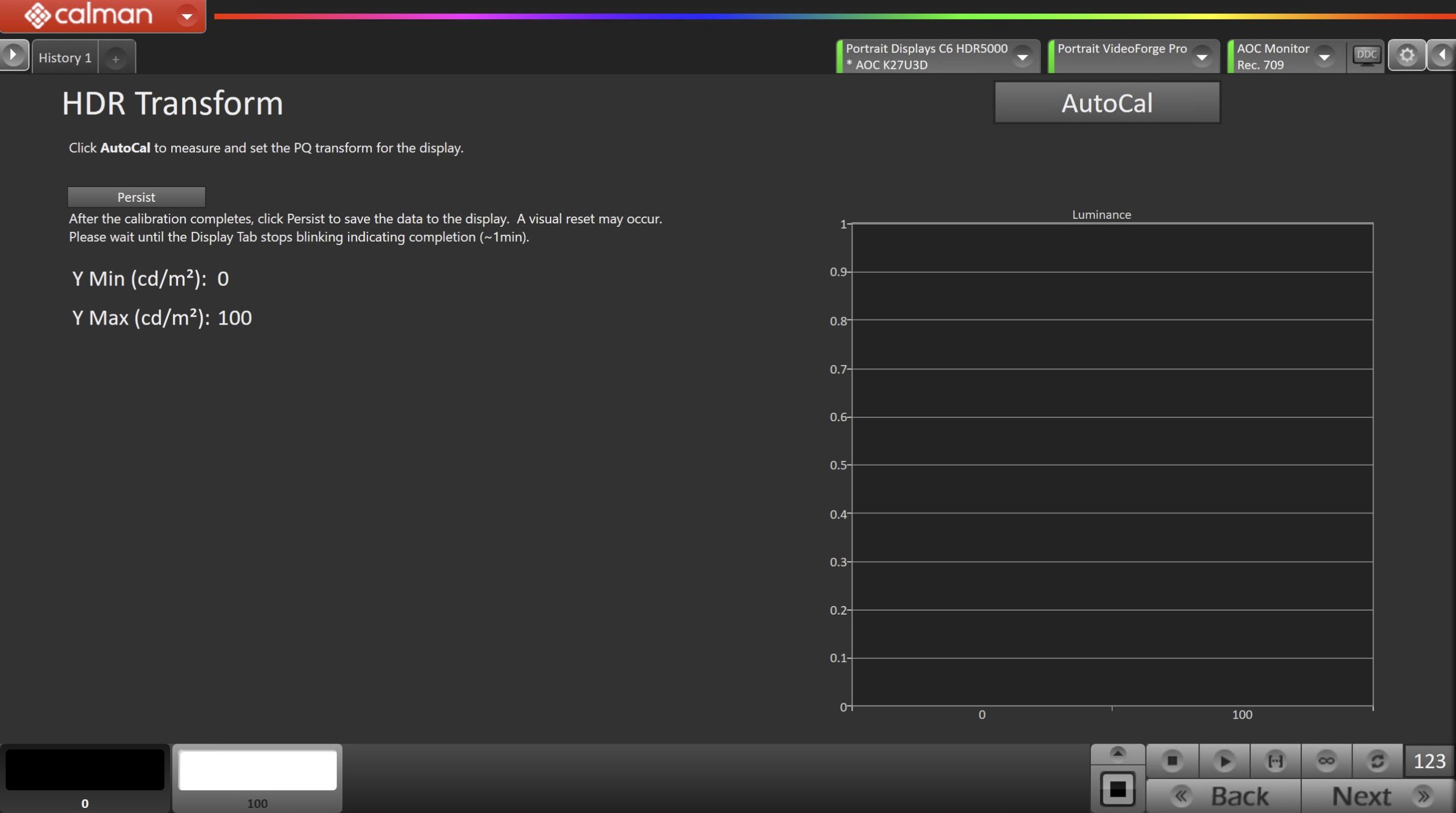
- Click AutoCal to measure and set the PQ transform for the display.
- When completed, click the Persist button to save the calibration data to the display.
- A visual reset may occur. Please wait until the Display Tab stops blinking, indicating completion.
- Click Next when complete
Step 8
- In this step, you’ll take measurements of the calibration results.

- To take Post-Calibration Measurements, click the Measure button to measure the display’s grayscale and color response.
- Click Next to proceed
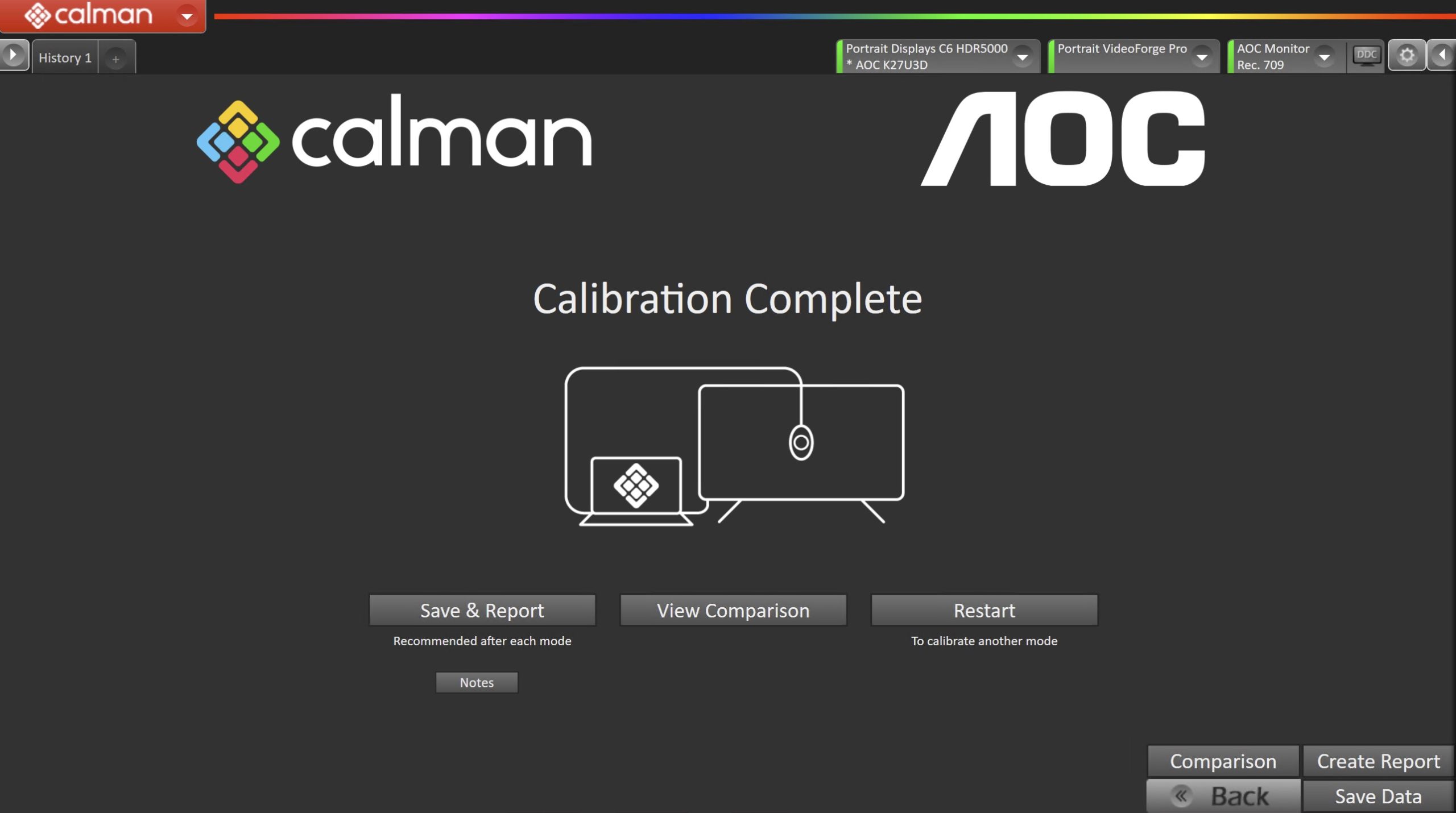
- On the Calibration Complete page, you can choose to…
- Save and Report
- Select Save and Report to generate the calibration report
- View Comparison
- Displays Pre and Post Calibration measurements of the calibrated mode side-by-side
- Restart
- Returns to the beginning of the workflow, where a new mode or colorspace can be selected
- Note: Does not save workflow data
- Save and Report