The BenQ Monitor Calibration workflow in Calman provides automated calibration for supported BenQ models. Depending on the monitor’s capabilities, Calman can load a full 3D LUT directly into the display or apply a 1D LUT paired with a color correction matrix. This workflow guides you through configuring your targets and performing accurate calibrations using the monitor’s internal processing.


Calman Required Version
- Calman (Ultimate or Studio) Version 5.16.7 or later
Hardware Requirements
Calman Supported Models
- Matrix-Only Models
- BenQ PV270
- BenQ SW270C
- BenQ SW271C
- BenQ SW321C
- 3D LUT or Matrix Models
- BenQ SW272U
- BenQ SW272Q
- BenQ SW242Q
Step 1
- From the Calman Menu in the top-left, choose Open Workflow Template -> Calman Ready and then BenQ.
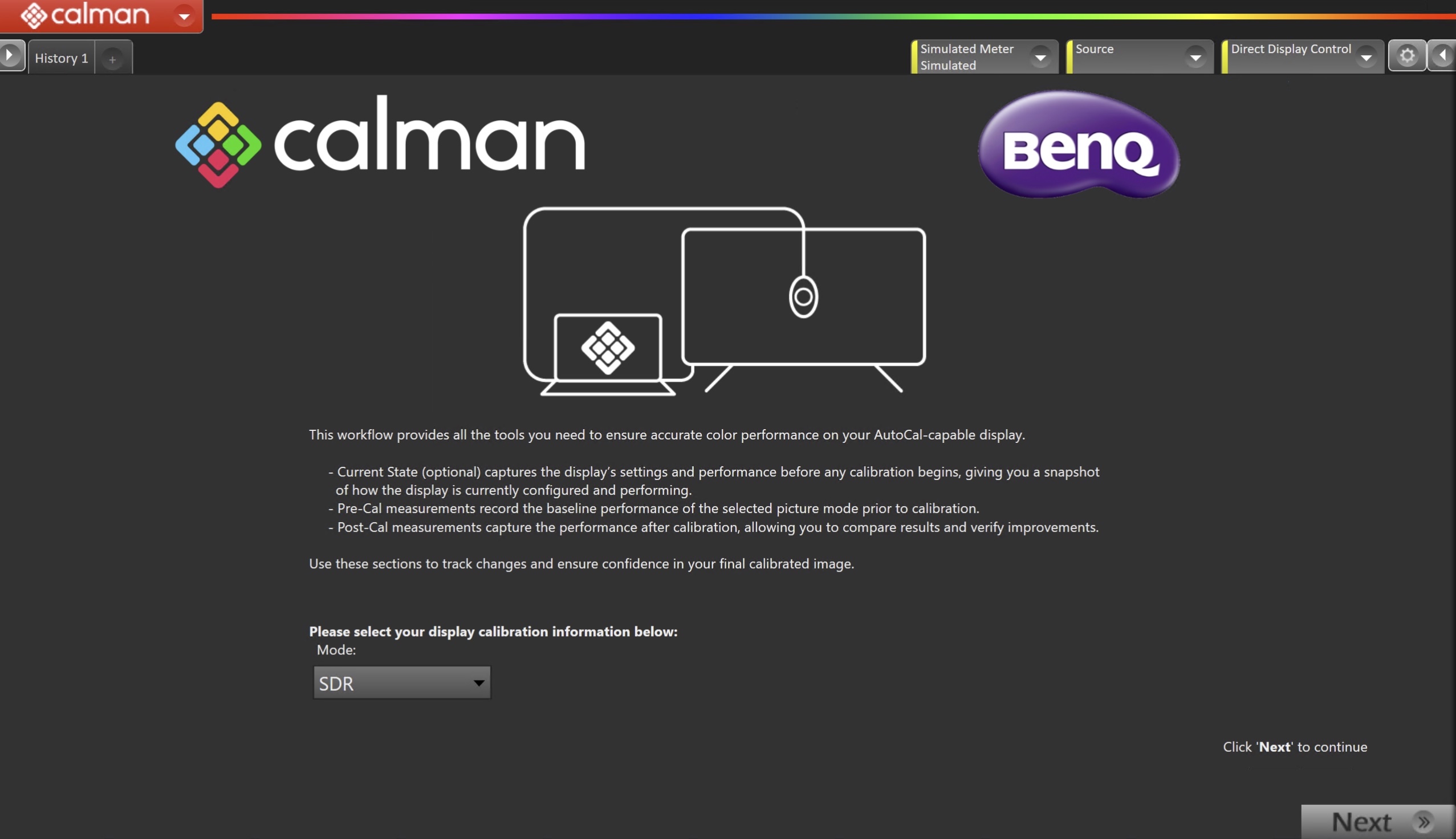
- On the introduction screen, select your calibration mode (SDR or HDR) from the dropdown and click Next to proceed to Hardware Setup
Step 2
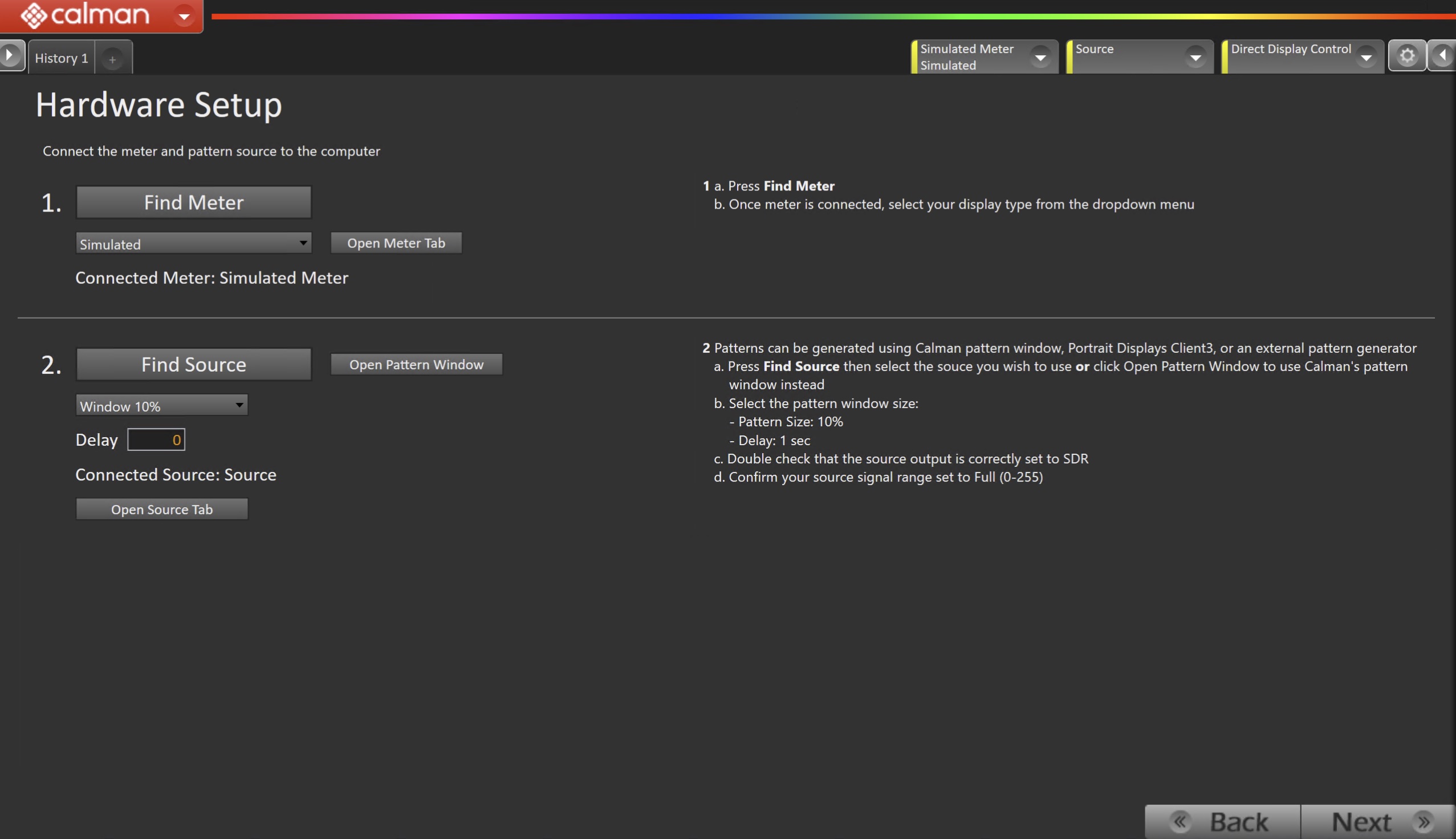
- Plug your meter into a USB port on the computer and press the Find Meter button on the left.
- When your meter is connected, select your display type from the dropdown
- Connect Pattern Source to your computer.
- Click the Find Source button, then select your source
- Note:
- For HDR calibration, your source should NOT send any HDR metadata.
- PG and display should both be set to Full Range.
- Internal Pattern Generator not supported for HDR calibration
- Note:
- Select the pattern window size and delay
- Window 10% with 1-second delay
- Click the Find Source button, then select your source
- Click Next to proceed
Step 3
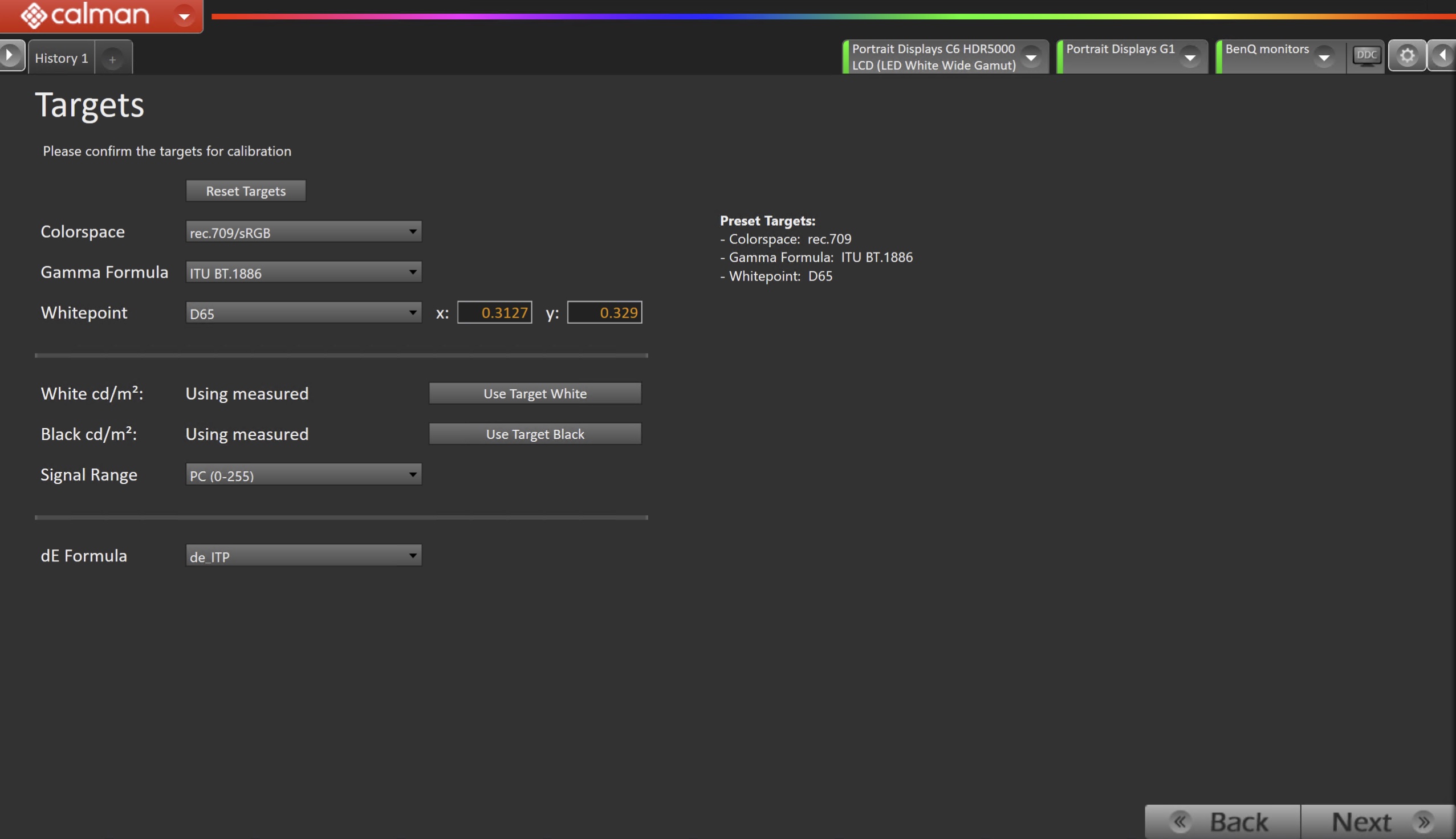
- Confirm/configure your calibration targets. These will be automatically set to common defaults by the options from Step 1
| SDR | HDR |
|
|
(Optional) Current State Measurements
- This workflow page is intended to document the monitor’s current operational state before establishing any DDC connection or selecting a calibration mode.
- This step can be skipped if documenting the current state is not needed. Another set of Pre-Calibration measurements will be taken in later steps.
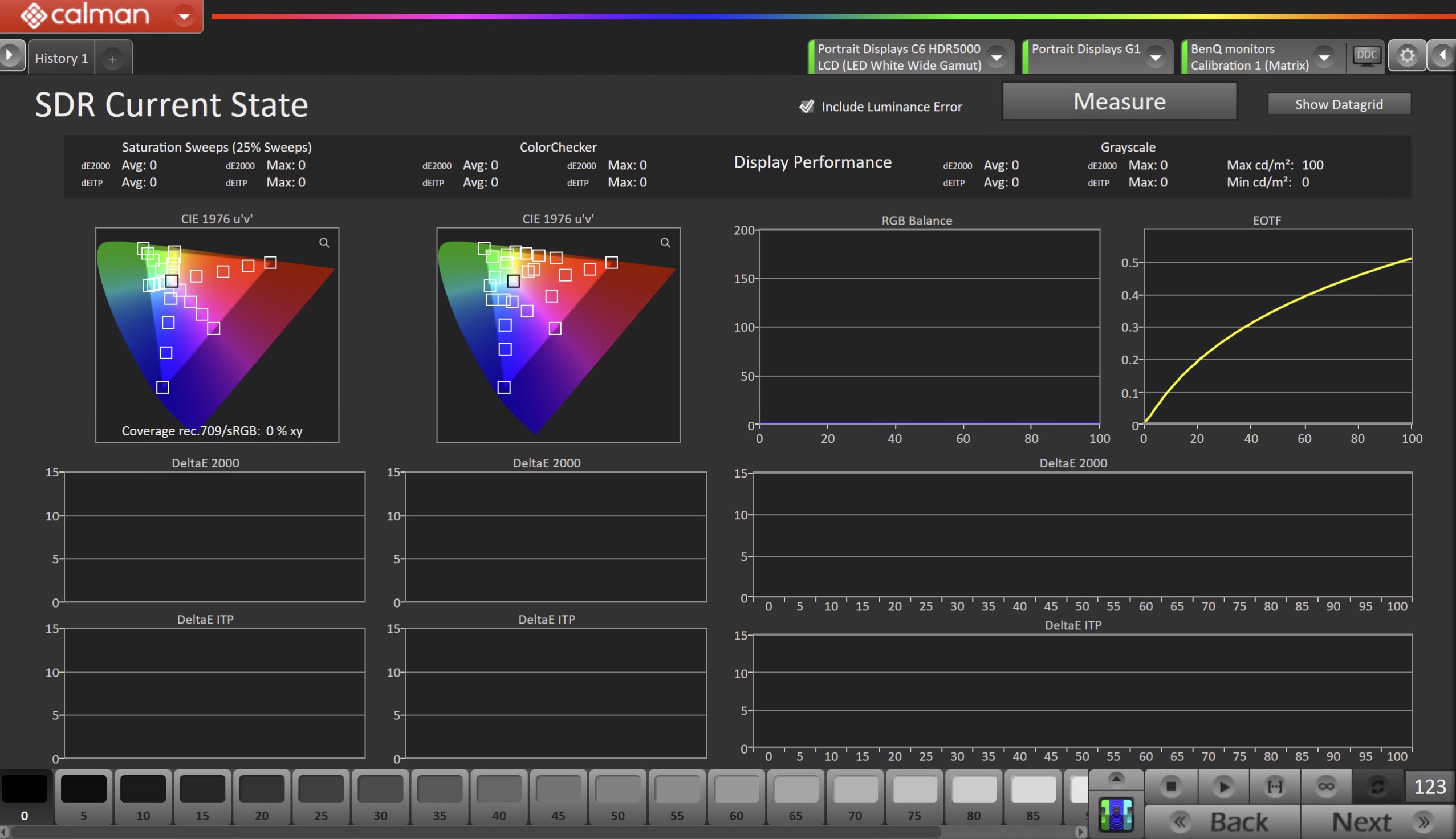
- To take Current State Measurements, click the Measure button to measure the display’s rayscale and color response.
- Click Next to proceed
Step 4
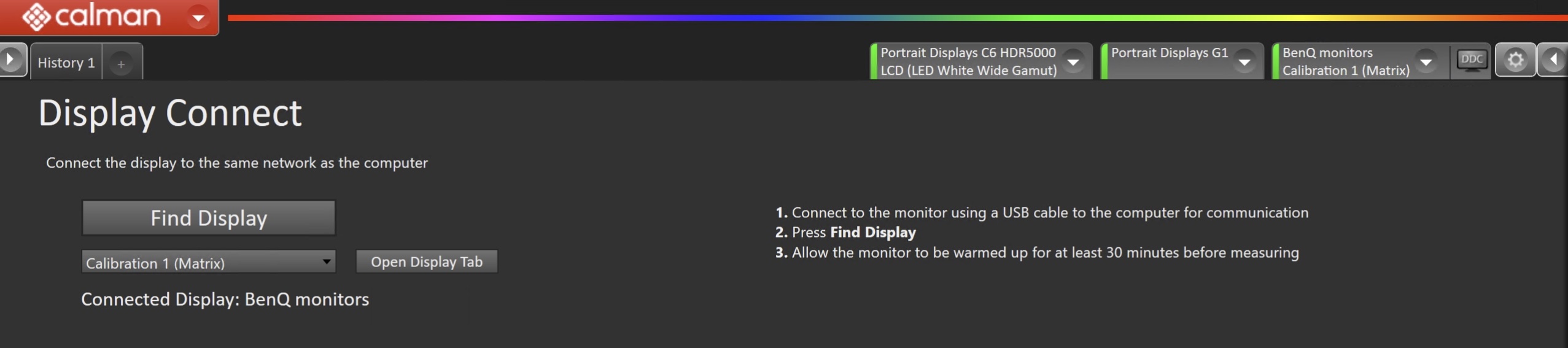
- Connect your BenQ Monitor
- Connect the monitor to the computer using a USB-C cable for communication.
- Click Find Display
- On the Find Display dialog, choose the option containing your BenQ model and click Connect.
Pre-Calibration Measurements
- This workflow page is intended to document the target picture mode prior to calibration.
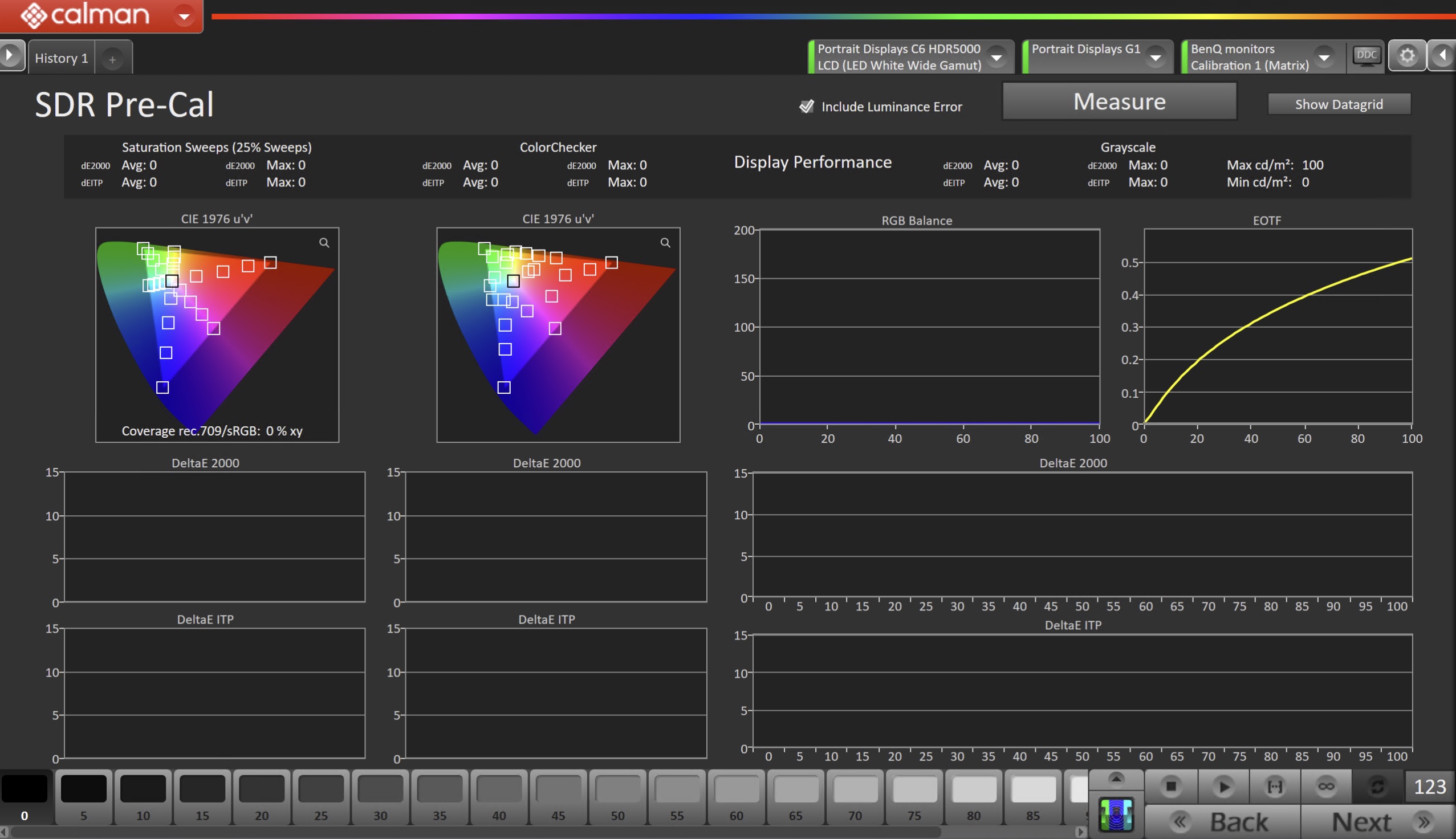
- To take Pre-Calibration Measurements, click the Measure button to measure the display’s rayscale and color response.
- This will provide a point of reference to compare the calibration results
- Click Next to proceed
Step 5
- Here, the target picture mode can be selected, and the display will be reset to prepare for calibration.
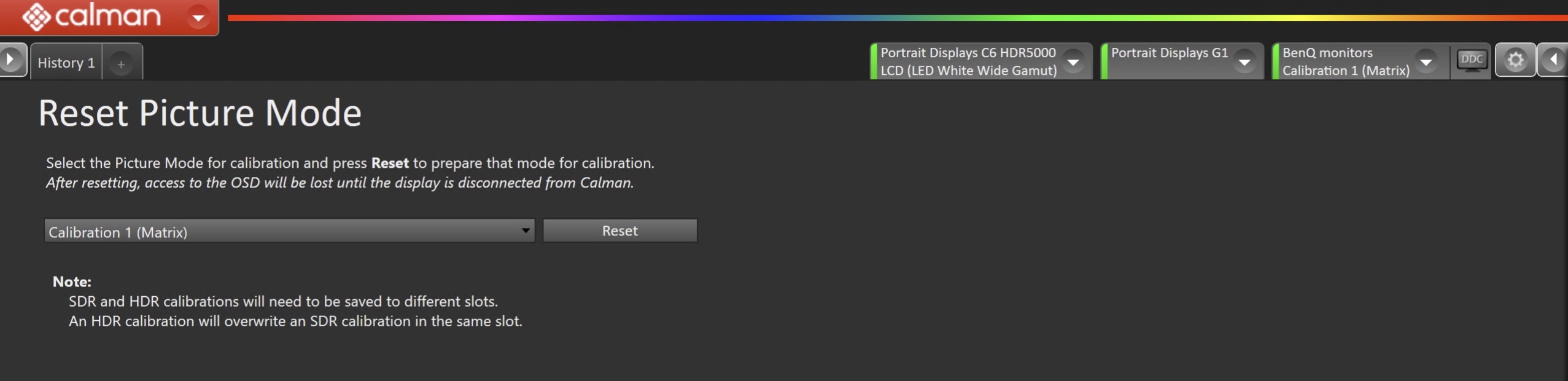
- Select the display mode and method you wish to calibrate, and click Reset to prepare the display for calibration
|
Notes:
|
- Click Next to proceed
SDR Only – Luminance and 1D LUT calibration
- Here, you can adjust the monitor’s overall luminance setting to one that meets or exceeds your target luminance.
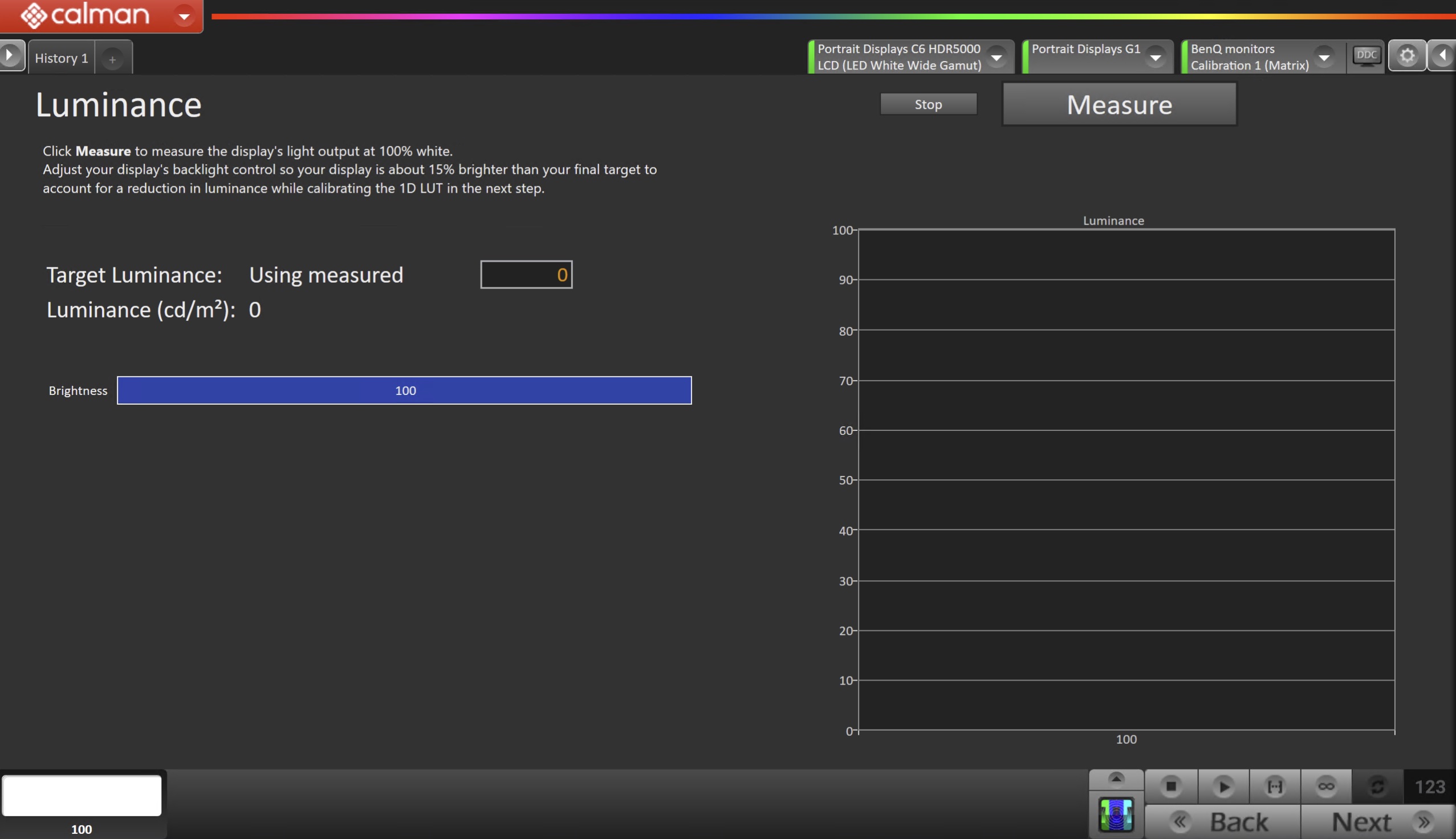
- Click Measure and adjust the Brightness slider as needed.
- In the Target Luminance box, you can also set the target luminance that the 1D LUT will achieve.
- Click Next to proceed
- Calman will now adjust the Multipoint Greyscale of the display using a 1D LUT.
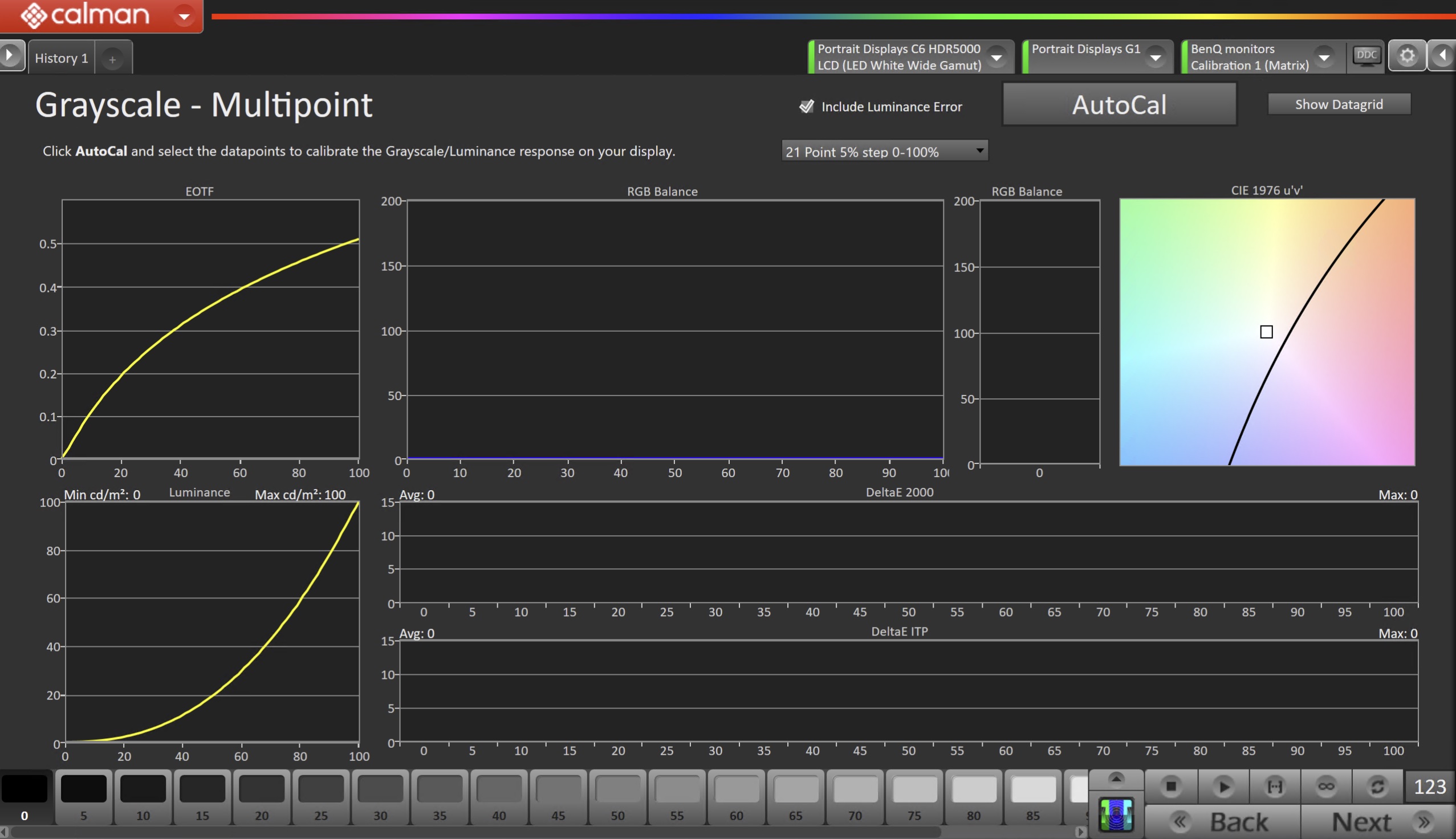
- Click the AutoCal button and select the number of data points in the AutoCal Dialog to auto-calibrate the Grayscale/Luminance response on the display.
- Click OK to begin greyscale AutoCal.
- When AutoCal is complete, click the Next button to proceed.
Step 7
- On this page, Calman will calibrate the color gamut using a 3D LUT or Matrix, depending on the mode chosen in step
| 3D LUT | Matrix |
 |
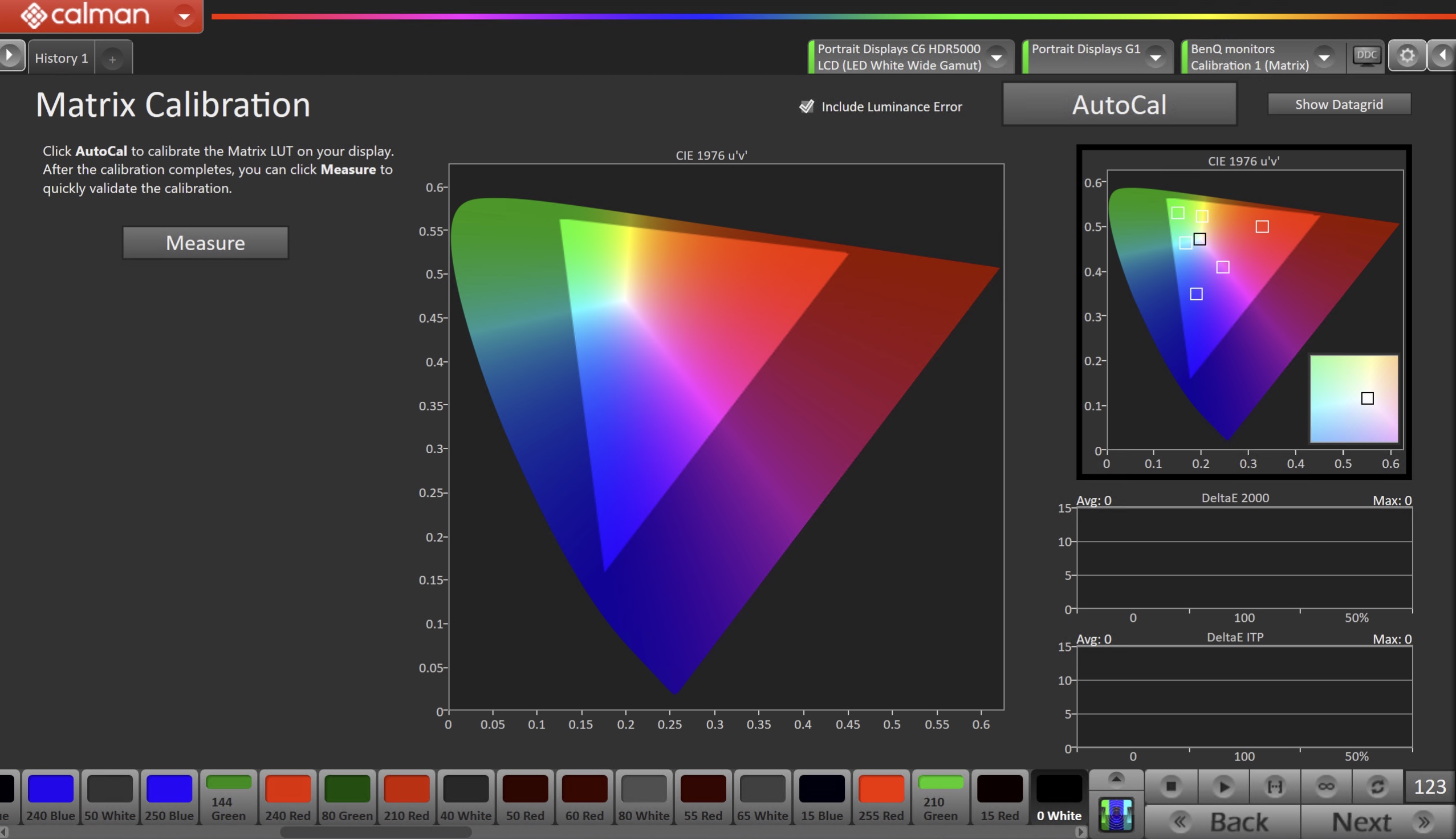 |
- Click the AutoCal button to open the AutoCal dialog
- Recommended LUT types:
- SDR: Lightning LUT
- HDR: Fixed-Grid LUT
- Recommended LUT types:
- Click OK to begin the colorspace AutoCal process
- When AutoCal is complete, click the Next button to proceed
SDR Only – Check Luminance
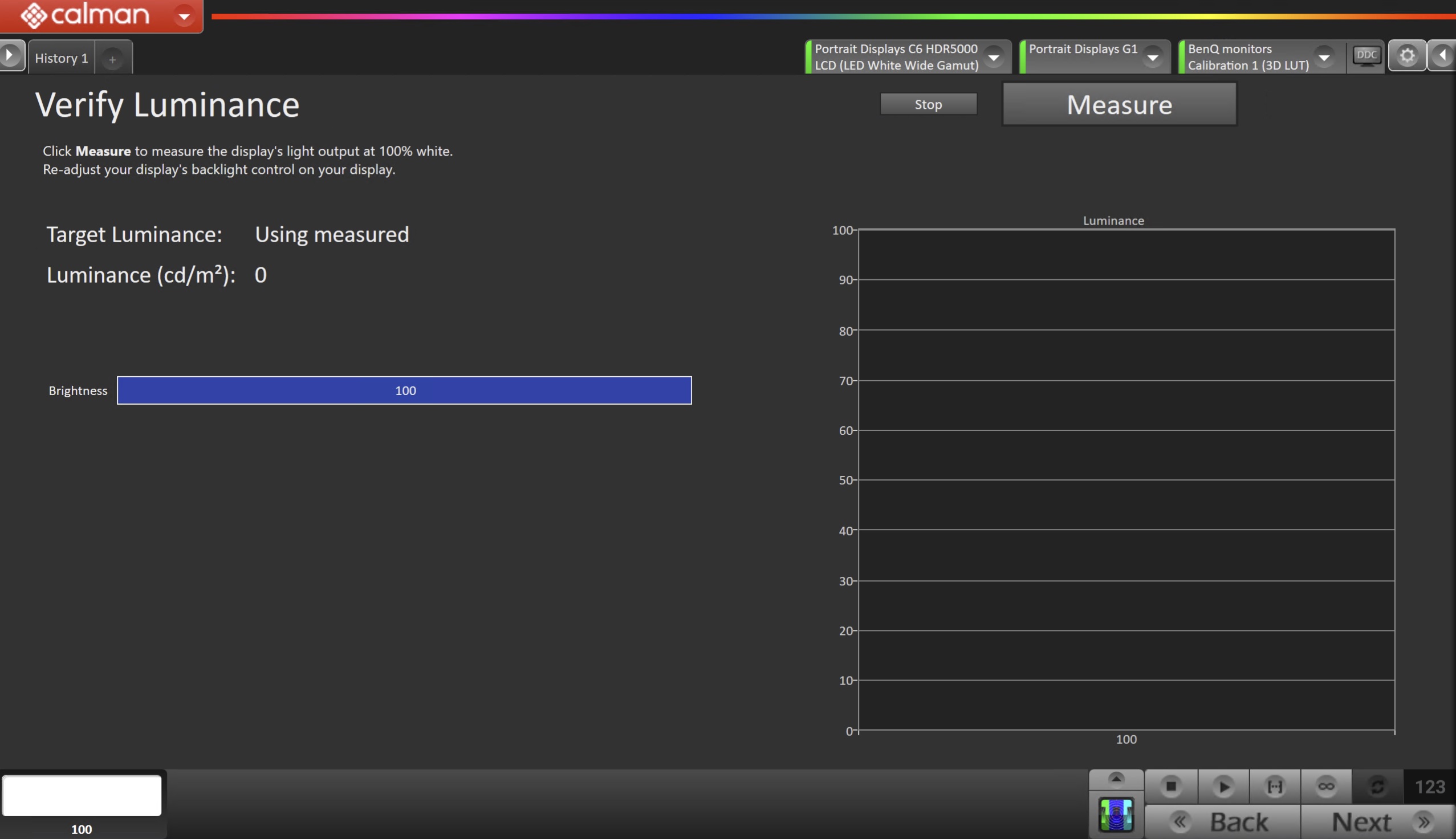
- Click Measure to confirm your post-calibration luminance
- Make small adjustments if needed
- Click Next to proceed
Step 8
- In this step, you’ll take measurements of the calibration results.
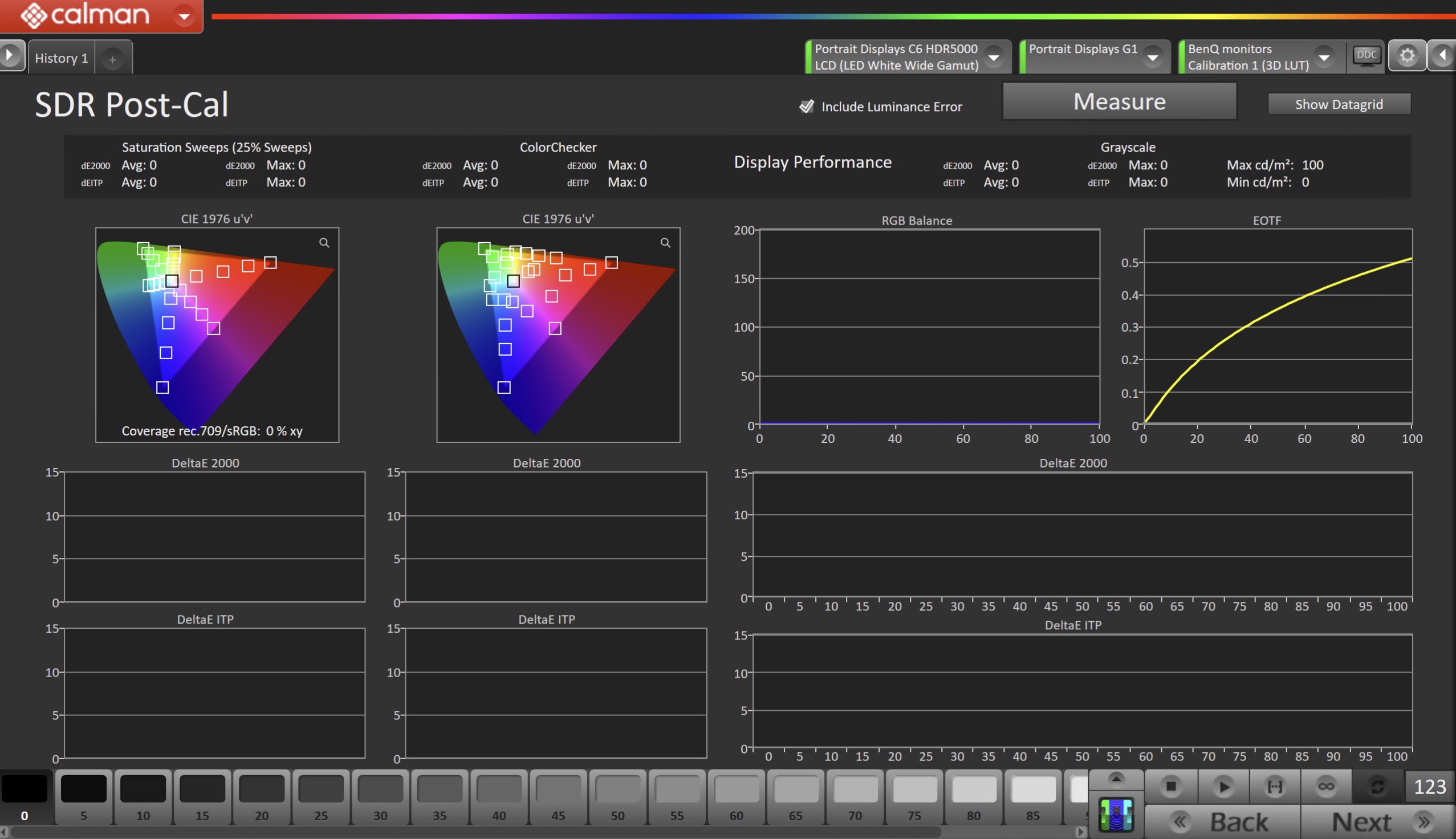
- To take Post-Calibration Measurements, click the Measure button to measure the display’s grayscale and color response.
- Click Next to proceed

- On the Calibration Complete page, you can choose to…
- Save and Report
- Select Save and Report to generate the calibration report
- View Comparison
- Displays Pre and Post Calibration measurements of the calibrated mode side-by-side
- Restart
- Returns to the beginning of the workflow, where a new mode or colorspace can be selected
- Note: Does not save workflow data
- Save and Report